
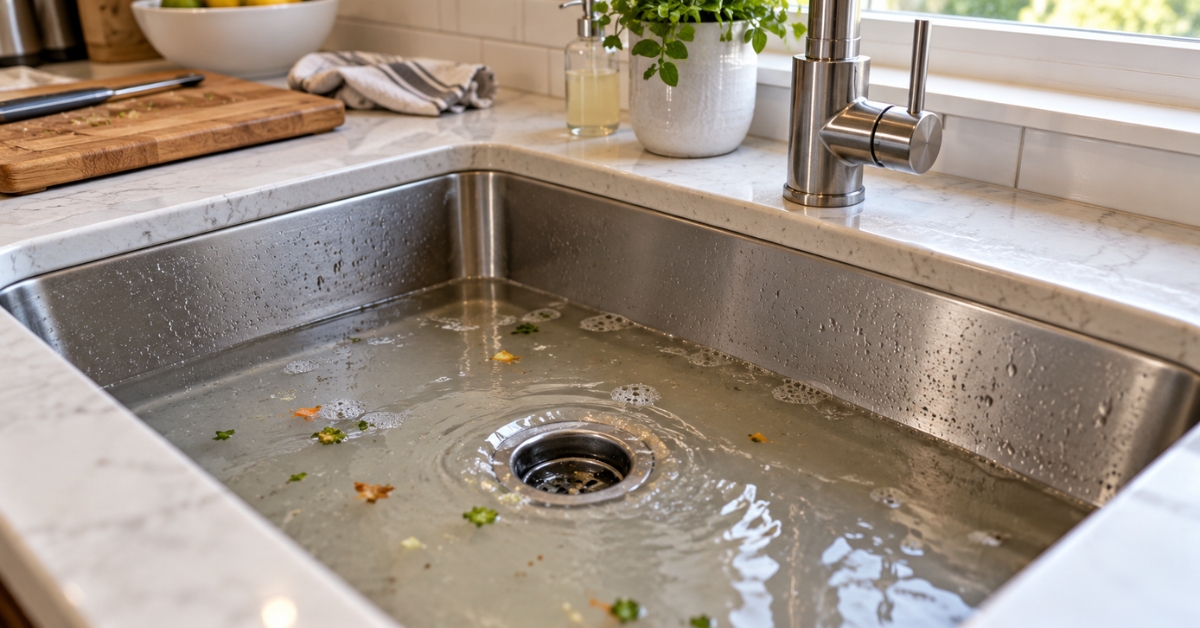
A slow drain can seem like one of the smaller problems a homeowner has to deal with. Water still goes down eventually, the sink or shower remains usable, and a store-bought product or quick plunge may seem to get things moving again. When the problem appears minor, it is easy to assume that another quick fix is all the drain needs.
The situation changes when the same drain slows down repeatedly, several fixtures begin acting differently, or new symptoms appear alongside the sluggish drainage. At that point, the issue may no longer be a simple obstruction near the drain opening. Recognizing that difference can help homeowners avoid repeatedly treating the symptom while a deeper drainage problem continues to develop.
When a Slow Drain Is More Than a Minor Clog
A one-time clog often has a straightforward explanation. Hair may collect in a shower drain, food debris can build up in a kitchen sink, or an object may partially block a bathroom drain. If the obstruction is small and accessible, removing it may restore normal drainage without further problems.
Recurring slow drainage is different. If water begins draining slowly again days or weeks after being cleared, something may still be restricting the pipe.
Professional drain cleaning services can be useful when the problem repeatedly returns or when there are signs that the obstruction is deeper in the drainage system. Rather than focusing only on getting water moving again, professional service can help determine what is interfering with normal flow and whether a larger drainage issue needs attention.
The important distinction is recurrence. A drain that clogs once and stays clear is very different from one that repeatedly needs plunging, snaking, or chemical treatment.
Watch How Quickly the Problem Returns
The amount of time between clogs can provide useful information.
Suppose a bathroom sink becomes slow because hair and soap have collected around the stopper. Removing that material may solve the issue completely. If the sink drains normally for months afterward, the clog was probably isolated.
If the same sink slows down again shortly after being cleared, however, the first attempt may have created only a temporary opening through the buildup. Material deeper in the line may still be reducing the usable diameter of the pipe.
Repeatedly restoring partial flow can make the drain appear fixed even though the underlying restriction remains.
Multiple Slow Drains Can Point to a Larger Issue
One slow fixture may indicate a localized clog. Several slow fixtures deserve closer attention.
For example, a homeowner may first notice that the shower drains slowly. A few days later, the bathroom sink begins doing the same thing. Eventually, another fixture may start gurgling or draining poorly.
When symptoms spread across multiple fixtures, the problem may involve a shared drain line rather than separate clogs developing at exactly the same time.
Homeowners dealing with drainage problems across different parts of the house may benefit from professional drain services in Utah that can evaluate the broader drainage system instead of treating each fixture as an unrelated problem.
The location of the affected fixtures also matters. Several drains behaving abnormally in one bathroom may point toward a branch line. Problems appearing throughout the home can suggest that the issue is farther downstream.
Gurgling Is a Drainage Warning Worth Paying Attention To
Drains are not supposed to regularly make bubbling or gurgling noises.
Those sounds can occur when air is being displaced unusually as water moves through the plumbing system. A restriction may interfere with normal drainage and cause air to move through nearby traps or fixtures.
You might hear a sink gurgle after flushing a toilet or notice bubbling from a shower drain while another fixture is being used. These interactions can be especially useful clues because they suggest the fixtures may be affecting one another through connected piping.
Gurgling does not identify the exact problem by itself. It does, however, give homeowners another reason to look beyond the visible drain opening.
Persistent Drain Odors Can Signal Buildup
An unpleasant smell coming from a drain is sometimes caused by material accumulating inside the pipe.
Kitchen drains can collect grease, food residue, and organic material. Bathroom drains may accumulate hair, soap residue, skin oils, and other debris. Even when water can still pass through, material coating the pipe can trap additional debris and contribute to odor.
Cleaning only the area near the opening may improve the smell temporarily without removing buildup farther inside the drain.
Persistent odors should also be evaluated in context. If a drain smells bad while also draining slowly, backing up, or making unusual sounds, the combination of symptoms provides more reason to investigate the drainage system rather than repeatedly deodorizing the fixture.

Standing Water Means the Restriction Is Getting Harder to Ignore
Slow drainage can gradually become standing water.
A shower may begin with water pooling around your feet but eventually drain after the water is turned off. Over time, that pool may become deeper and take longer to disappear. A sink might initially empty slowly before reaching the point where water remains in the basin for an extended period.
This progression often means the available pathway through the pipe is becoming more restricted.
At this stage, repeatedly adding drain cleaner or aggressively plunging the fixture may not address what is causing the restriction. Professional evaluation can determine whether the blockage is isolated or whether additional plumbing repairs may be needed because of a problem with the piping itself.
Backups Are Different From Ordinary Slow Drainage
A backup is one of the clearest signs that wastewater is no longer moving through the drainage system as intended.
Instead of simply taking longer to drain, water or wastewater may return through a fixture. A toilet may affect a nearby tub, or water from one fixture may appear somewhere else in the home.
That behavior should not be treated like an ordinary slow sink.
Backups can create sanitation concerns and may worsen quickly depending on the location and severity of the obstruction. If wastewater is entering living areas, fixtures cannot be used safely, or the situation is escalating rapidly, an emergency plumbing service may be appropriate.
The key is to limit water use until the problem can be evaluated. Continuing to run fixtures can send additional water toward a drainage system that already has difficulty carrying it away.
Clearing the Drain Is Not Always the Same as Fixing It
One of the biggest misconceptions about drain problems is that normal water flow automatically means the problem has been solved.
Imagine a pipe with heavy buildup along its interior walls. A small pathway remains through the center, but eventually debris blocks that opening. A quick treatment creates a hole through the obstruction, allowing water to pass again.
Technically, the drain has been cleared. The buildup around that opening, however, may still be there.
That distinction explains why clogs return even after a homeowner successfully gets water moving again. Restoring flow can provide immediate relief without necessarily removing the condition that contributed to the clog.
Recurring Problems Need a Different Question
Instead of asking, “How do I unclog this drain again?” it can be more useful to ask, “Why does this drain keep clogging?”
That shift changes the goal from temporary flow restoration to identifying the recurring cause.
The answer may be accumulated grease, soap residue, hair, foreign material, or another obstruction. In other cases, the drainage issue may be connected to the condition, configuration, or performance of the piping.
This is why inspection can become increasingly important when the same symptoms repeatedly return.
Why Inspection Matters Before Choosing a Solution
Not every drainage problem needs the same treatment.
A localized obstruction close to a fixture is different from widespread buildup farther into a drain line. Both are different from a damaged or compromised pipe.
Inspection helps narrow down the possibilities before deciding what type of work is appropriate. A professional can consider which fixtures are affected, when symptoms occur, how frequently the problem returns, and what previous attempts have already been made.
That process can prevent a cycle in which the same temporary solution is used over and over without addressing the reason the drain keeps slowing down.
The Pattern Can Be as Important as the Symptom
Homeowners can provide valuable information by paying attention to patterns before service begins.
Consider when the drain first became slow, whether it has been cleared previously, and how long each attempted fix lasted. Note whether another fixture causes bubbling, whether odors are persistent, and whether drainage becomes worse when several fixtures are used.
These details can help distinguish an isolated clog from a problem affecting a larger portion of the system.

Be Careful With Repeated Chemical Drain Treatments
Chemical drain cleaners can seem convenient because they require little effort and may restore some flow. Repeated use, however, should not become the default response to every recurring drain problem.
A product that moves enough material to reopen a narrow passage does not necessarily clean the entire restriction. Homeowners may therefore end up treating the same drain repeatedly while the underlying buildup remains.
There is also the practical issue of what happens next. If professional service becomes necessary, it is important to tell the plumber about any chemical products recently poured into the drain.
A recurring clog is usually a signal to investigate why the problem keeps developing rather than continually increasing the intensity or frequency of DIY treatments.
When It Is Time to Stop Using Quick Fixes
There is no single number of clogs that automatically means professional drain cleaning is required. The pattern and severity of the symptoms matter more.
A professional evaluation becomes more reasonable when a drain repeatedly slows after being cleared, several fixtures are affected, gurgling accompanies drainage, persistent odors develop, standing water becomes common, or wastewater begins backing up.
Another important sign is a steadily shortening period between clogs. If a drain used to remain clear for months after being plunged but now becomes slow again within days, temporary fixes are becoming less effective.
At that point, continuing the same approach is unlikely to provide a different long-term result.
FAQ About Slow and Recurring Drains
How do I know if my slow drain needs professional cleaning?
A drain that becomes slow once may only have a minor localized clog. Professional evaluation becomes more appropriate when the problem repeatedly returns, affects multiple fixtures, causes standing water, produces persistent odors or gurgling, or progresses to backups.
Why does my drain keep clogging after I clear it?
The initial attempt may have opened a pathway through the obstruction without removing all of the buildup. Material left inside the pipe can collect new debris and gradually restrict the drain again.
Is one slow drain a serious plumbing problem?
Not necessarily. A single slow drain can result from a localized obstruction near the fixture. Pay attention to whether it returns after being cleared or whether other fixtures begin developing similar symptoms.
What does it mean when multiple drains are slow?
Several affected fixtures can indicate that the restriction is located in piping shared by those drains. The specific fixtures involved and their locations can help determine where the problem may be occurring.
Why does my drain gurgle?
Gurgling can occur when air moves unusually through the drainage system as water passes a restriction. If the sound is persistent or appears alongside slow drainage or backups, the system should be evaluated.
Should I keep using drain cleaner if the clog returns?
Repeatedly treating the same drain may restore temporary flow without addressing the underlying cause. If the problem keeps returning, investigating why it is recurring is generally more useful than continuing the same quick fix.
When does a slow drain become an emergency?
A slow drain becomes more urgent when wastewater backs up into fixtures or living spaces, several fixtures stop draining properly, or normal water use causes sewage or wastewater to return elsewhere. Those conditions may warrant prompt professional attention.
Pay Attention to What the Drain Is Telling You
The difference between a simple clog and a recurring drainage problem is often visible in the pattern. A one-time obstruction that is removed and never returns may require nothing more. A drain that repeatedly slows, interacts with other fixtures, produces odors or sounds, or eventually backs up is telling a different story.
Quick fixes are useful when the problem itself is quick and simple. When symptoms keep returning, the better goal is to identify what is restricting the drainage system and determine whether cleaning or another plumbing solution is appropriate. Addressing the cause can help break the cycle of temporary improvement followed by another frustrating clog.
