
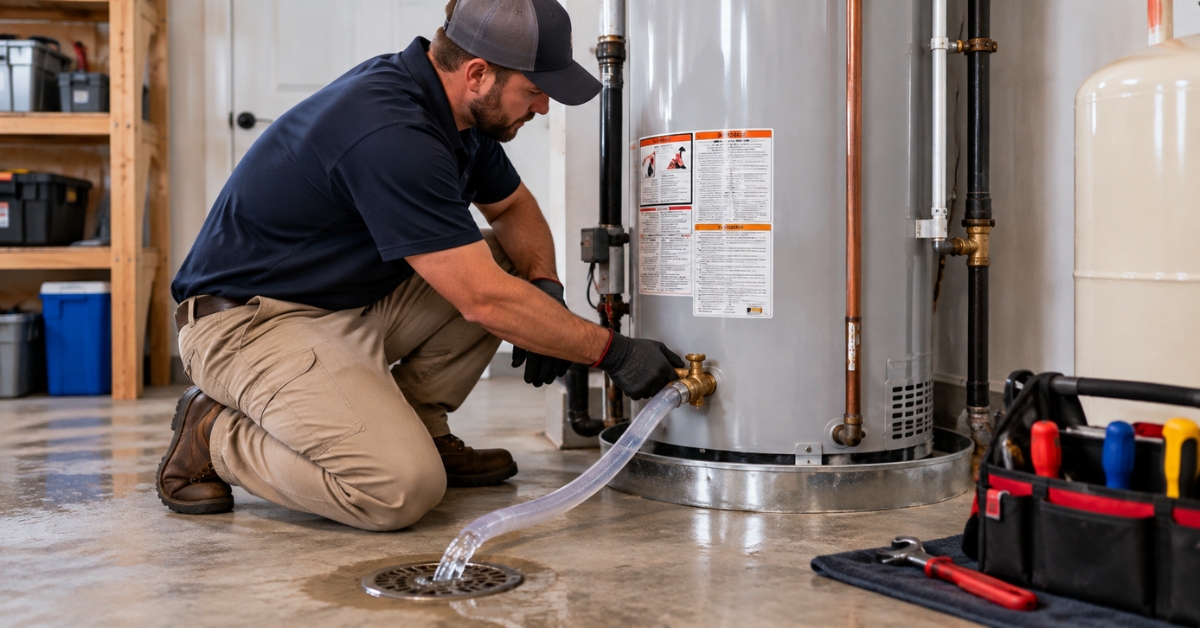
Flushing a water heater is one of those maintenance tasks homeowners often hear they should do regularly. The idea sounds simple: drain the tank, remove buildup, and help the system keep working efficiently. But does flushing actually extend the life of a water heater, or is the benefit sometimes overstated?
The answer depends on the type of water heater, the amount of mineral buildup inside it, the quality of the local water supply, and the condition of the equipment. Flushing can be useful maintenance, but it is not a cure for corrosion, failing components, or years of neglected service. Understanding what the process actually removes can help homeowners make better decisions about when maintenance makes sense.
What Does Flushing a Water Heater Actually Do?
Traditional tank water heaters continuously store a large volume of water. As water enters the tank, minerals and other particles can eventually settle toward the bottom. Calcium and magnesium are common contributors to this accumulation, particularly where hard water is present.
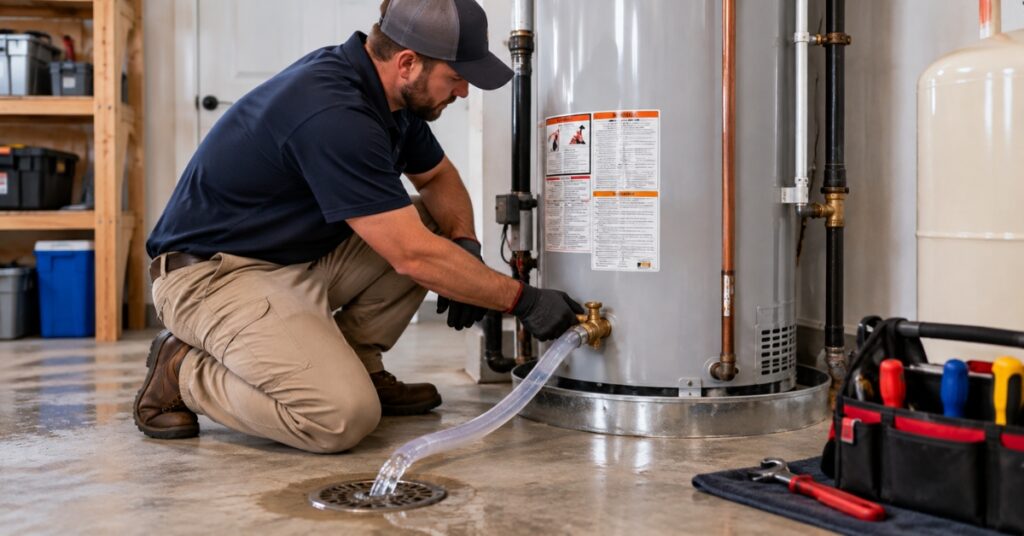
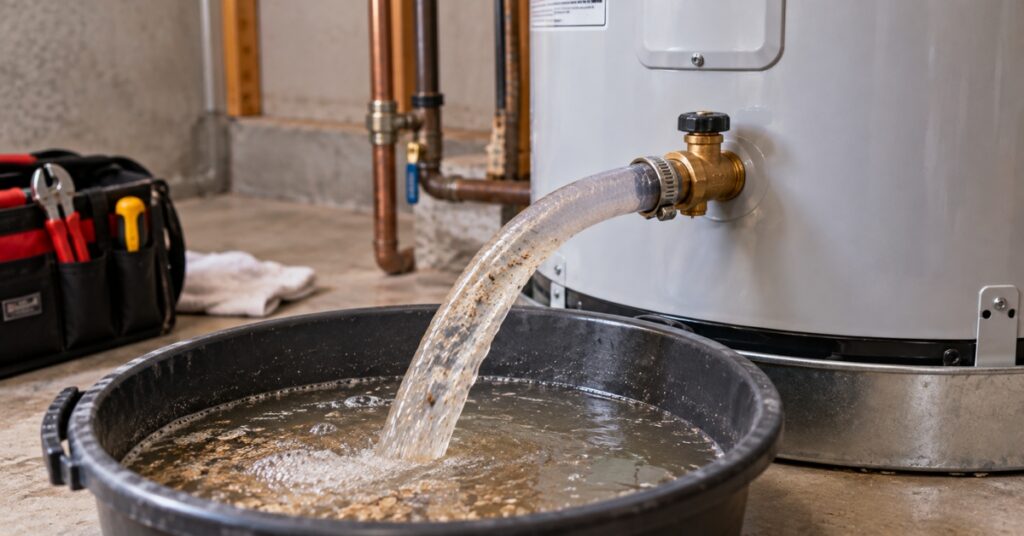
Flushing a water heater involves draining water from the tank to help carry loose sediment out through the drain valve. Depending on the system and its condition, the process may involve allowing additional water into the tank to stir up and remove more of the material.
If you are dealing with performance problems or are unsure about the condition of the unit, having a professional service hot water tank equipment before attempting maintenance can be useful. A plumber can evaluate whether sediment is likely contributing to the problem or whether symptoms point to another repair need.
The goal is not to make an aging tank new again. It is to reduce accumulation that may interfere with normal operation.
Why Sediment Accumulates Inside Water Heater Tanks
Sediment does not necessarily mean that something is wrong with the water heater. It can be a natural consequence of heating and storing mineral-containing water over time.
As water is heated, dissolved minerals can separate from the water and settle inside the tank. The rate at which this happens varies considerably from one household to another.
Hard Water Can Speed Up Buildup
Homes with hard water may experience mineral accumulation more quickly than homes supplied with softer water. Temperature settings, household water consumption, and the characteristics of the local water supply can also affect the rate of buildup.
This is one reason a single maintenance schedule is not ideal for every water heater. A tank that develops substantial sediment relatively quickly may need a different approach than one with minimal accumulation.
Sediment Can Settle Around the Heating Area
As material collects at the bottom of a gas water heater, it can create a layer between the burner and the stored water. Electric models can also develop deposits around heating elements and other internal surfaces.
The presence of sediment does not automatically mean a water heater is about to fail. The amount, location, and condition of the buildup matter.
Can Flushing Help a Water Heater Last Longer?
Potentially, yes. Regular maintenance can help reduce conditions that force a water heater to work harder or contribute to declining performance. However, flushing should be viewed as preventive maintenance rather than a guarantee of a longer service life.
A water heater’s lifespan also depends on factors such as tank construction, installation quality, water chemistry, usage, operating temperature, anode rod condition, and corrosion.
Flushing addresses one part of that larger picture: loose sediment and mineral accumulation.
For homeowners interested in preventive maintenance beyond water heaters, reliable plumbing tips can also help identify routine tasks and warning signs before small plumbing issues become larger ones.
What Do Popping and Rumbling Sounds Mean?
One of the most common reasons homeowners start thinking about flushing is noise from the tank.
Popping, crackling, or rumbling sounds can occur when water and steam interact with sediment at the bottom of the tank. Water trapped beneath or within the sediment can heat, form steam bubbles, and move through the deposits, producing noticeable sounds.
Noise Does Not Always Mean the Tank Is Failing
A noisy water heater should not automatically be considered a failed water heater. Sediment may be contributing to the sound, but other mechanical or plumbing conditions can also produce unusual noises.
The age of the equipment and changes in hot water performance provide useful context. A relatively young system with known mineral buildup is a different situation from a much older tank that has begun making new noises after receiving little maintenance for years.
Persistent or worsening noise is a reason to have the system evaluated rather than assuming flushing alone will solve the problem.
How Sediment Can Affect Hot Water Performance
Heavy accumulation can affect how effectively heat moves into the water. If sediment creates an insulating layer near the bottom of a tank, the system may need to operate longer to reach the desired temperature.
Homeowners might notice longer recovery times, changes in available hot water, unusual sounds, or increasing operating costs. These symptoms are not exclusive to sediment, however. Thermostats, heating elements, burners, dip tubes, and other components can also affect performance.
That distinction matters because flushing a water heater cannot repair a damaged component.
If hot water is inconsistent or the system repeatedly loses performance, troubleshooting the entire unit may be more useful than treating sediment as the automatic cause.
Why Flushing an Older, Neglected Water Heater Can Be Different
A common maintenance recommendation is to flush a tank periodically. Problems can arise when that advice is applied without considering the history and condition of an older water heater.
Imagine a tank that has operated for many years without ever being flushed. The material inside may no longer consist only of loose sediment that can easily wash away. Significant mineral deposits may have hardened, and the tank itself may have experienced corrosion.
Maintenance History Matters
A plumber may want to inspect an older system before performing aggressive maintenance, particularly when the service history is unknown.
Draining an old tank also requires functioning valves and fittings. Components that have not been operated in years may be difficult to use or could reveal existing deterioration.
The better question is not simply, “Has this tank ever been flushed?” It is, “What condition is this water heater in now?”
That assessment can determine whether flushing is worthwhile, whether another maintenance step is needed, or whether replacement should be considered.
Tank and Tankless Water Heaters Need Different Maintenance
Tankless systems do not store dozens of gallons of hot water, so their maintenance needs are different. However, that does not mean they are immune to mineral buildup.
Minerals can accumulate inside the heat exchanger and internal waterways as water repeatedly passes through the system.
Tankless Systems Often Need Descaling
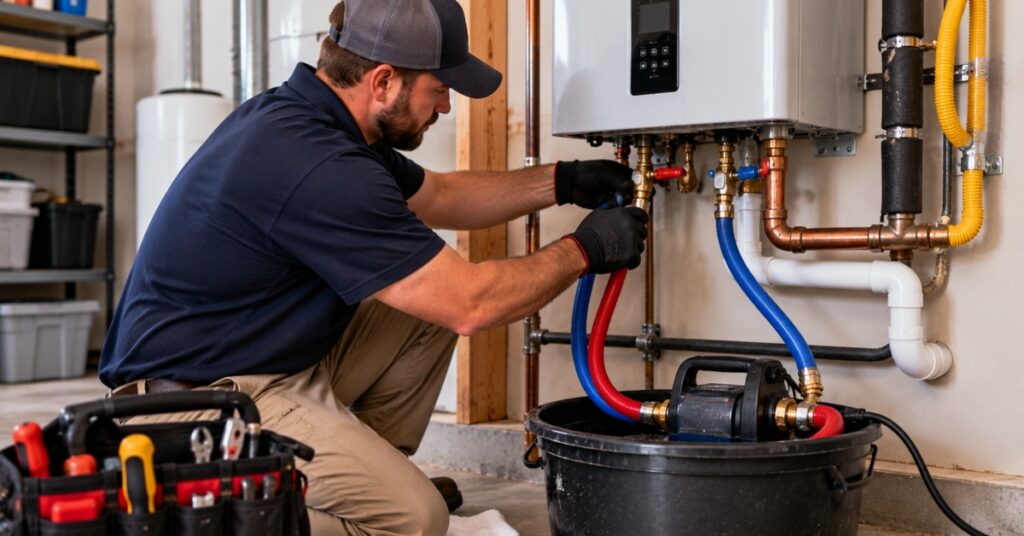
Maintenance for a tankless system commonly involves circulating an appropriate solution through the unit to remove scale from internal components. This process is usually referred to as descaling or flushing.
Professional tankless water heater maintenance can include flushing and descaling recommendations based on the system’s actual condition. Factors such as water hardness, usage, manufacturer recommendations, and existing buildup can influence how often service is appropriate.
This is an important distinction. Flushing a conventional storage tank primarily targets sediment sitting inside the tank, while tankless maintenance is focused on mineral scale that can accumulate along water pathways and heat-transfer surfaces.
How Often Should a Water Heater Be Flushed?
There is no universal interval that is perfect for every household.
Some manufacturers provide specific maintenance recommendations for their equipment, and those instructions should be considered first. Water hardness and usage patterns can also affect how quickly deposits develop.
A household with significant hard-water mineral content may need more frequent attention than one where buildup occurs slowly.
Look Beyond the Calendar
Instead of relying exclusively on an annual reminder, consider the complete maintenance picture.
The age of the heater, previous service history, local water conditions, visible sediment during prior maintenance, and changes in performance can all influence the appropriate schedule.
For a newer unit, establishing a sensible maintenance routine early can make future service more predictable. For an older unit with an unknown history, inspection may be the better first step.
What Flushing Cannot Fix
Flushing is useful when sediment is the problem it is intended to address. It does not fix every water heater issue.
A flush will not repair a leaking tank, restore a failed heating element, replace a deteriorated anode rod, correct a faulty thermostat, or reverse internal corrosion. It also cannot restore structural integrity to a tank that has already deteriorated.
This is why symptoms matter.
Water around the base of the tank, rust-colored water, recurring temperature problems, a pilot or burner that will not operate properly, or visible corrosion may require diagnosis rather than routine flushing.
Treating every water heater problem as sediment buildup can delay the plumbing repairs that are actually needed.
Preventive Maintenance Works Best Before Problems Become Severe
Flushing tends to make the most sense as part of an ongoing maintenance strategy rather than as an emergency response after years of declining performance.
Keeping track of the water heater’s age, maintenance history, and changes in operation can make it easier to recognize when something is different.
Homeowners can also periodically check the area around the water heater for moisture, corrosion, or signs of leakage. Changes in hot water temperature, recovery time, noises, and water appearance are worth noting.
The same principle applies throughout a home’s plumbing system. Small changes are often easier to investigate when they first appear than after they have developed into larger problems.
When an Evaluation Makes More Sense Than a Flush
There are situations where the next step should be an evaluation rather than immediately draining the water heater.
An older tank with no known maintenance history is one example. A leaking unit is another. Significant corrosion, unreliable hot water, repeated repairs, or unusual noises combined with advanced age can also justify a broader assessment.
A plumber can consider the condition of the tank, valves, connections, safety components, and heating system before recommending maintenance.
That approach avoids treating flushing as an automatic procedure regardless of equipment condition.
FAQ About Flushing a Water Heater
Does flushing remove all sediment from a water heater?
Not necessarily. Flushing can remove loose sediment and mineral particles, but hardened deposits may remain inside the tank. The amount removed depends on the condition of the system and the nature of the buildup.
Will flushing stop a water heater from making popping noises?
It may help if loose sediment is causing the noise. However, popping or rumbling should not automatically be attributed to sediment. Persistent noises may warrant professional evaluation.
Can flushing damage an old water heater?
The condition of an older tank should be considered before maintenance. Aging valves, corrosion, hardened deposits, and years without service can complicate the process. An inspection may be appropriate before draining a neglected unit.
Is tankless water heater flushing the same as flushing a tank?
No. A conventional tank is generally flushed to remove sediment that has settled inside it. Tankless systems are commonly flushed or descaled to remove mineral deposits from heat exchangers and internal water passages.
Does flushing improve water heater efficiency?
Removing significant sediment may improve heat transfer in situations where buildup has been interfering with normal operation. The actual effect depends on how much sediment is present and whether other components are affecting performance.
How do I know if my water heater needs flushing or repair?
Consider the system’s age, maintenance history, noises, hot water performance, and any visible signs of leaks or corrosion. When symptoms extend beyond normal sediment buildup, professional diagnosis can help determine whether maintenance, repair, or replacement is appropriate.
Give the Water Heater the Maintenance Its Condition Calls For
Flushing a water heater can be worthwhile preventive maintenance because it addresses sediment and mineral accumulation that may affect performance over time. Its value, however, depends on the equipment and its condition.
A newer tank with a consistent maintenance history may benefit from periodic flushing. A tankless system may require descaling based on mineral buildup and water conditions. An older storage tank that has gone many years without maintenance may deserve an inspection before anyone simply opens the drain valve.
The most useful maintenance plan is based on what is happening inside the system, not just a rule on the calendar. When homeowners pay attention to water quality, equipment age, unusual noises, performance changes, and maintenance history, they can make better decisions about when flushing is useful and when a water heater needs something more.
